Confirm the displayed mode
Read whether the thermostat says Heat, Cool or another mode. Note the fan setting without changing installer or wiring settings.

Referral service · independent providers · availability varies. Calling consents to possible call recording. Privacy · Disclosure
CLEVELAND, TENNESSEE · HEAT PUMP HELP
Air is moving, but warmth seems to be missing. Note the thermostat mode, how long the air feels cool and whether the home is losing temperature.
Referral service · independent providers · availability varies.
Calling consents to possible call recording. Privacy · Disclosure
Residential ducted systems · Independent providers
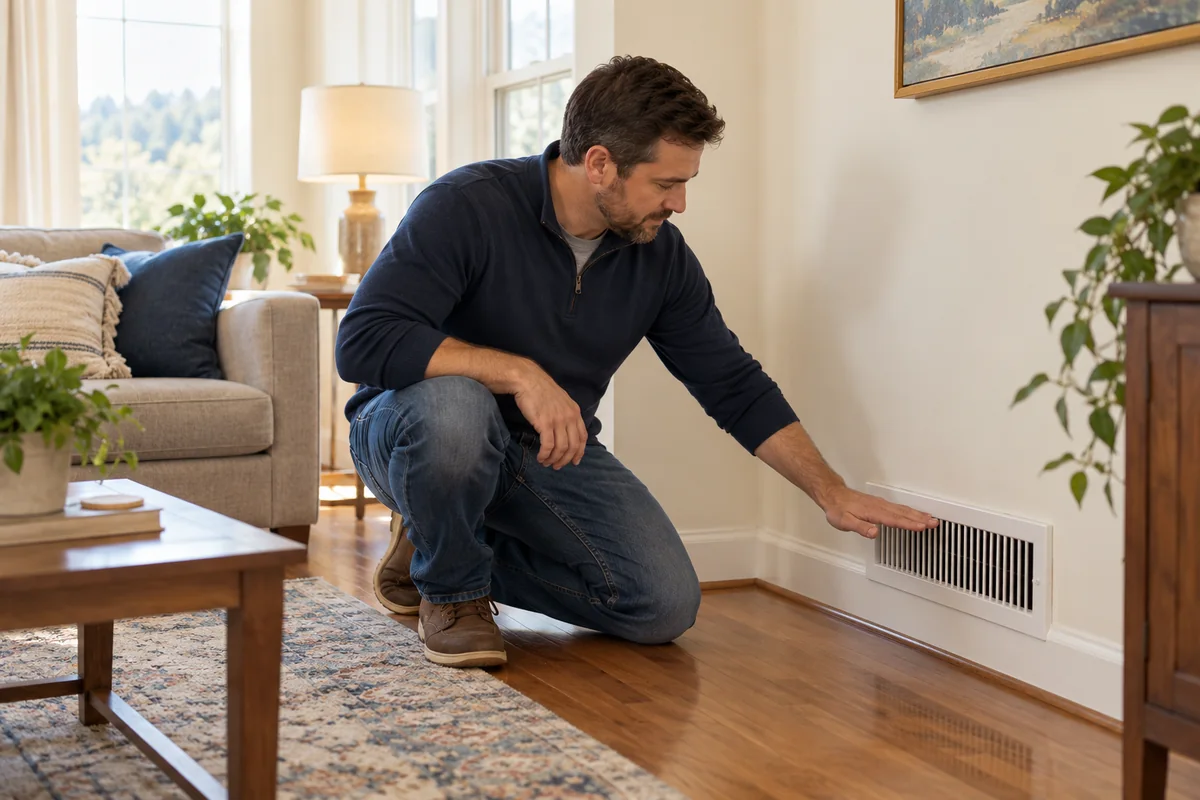
Read whether the thermostat says Heat, Cool or another mode. Note the fan setting without changing installer or wiring settings.
Say if the cool airflow is short-lived or continues while the room gets colder. Timing is important when describing the symptom.
Note where you feel the difference. An isolated room concern is a different observation from cool airflow throughout the home.
In heating mode, a heat pump may briefly change operation while clearing frost from its outdoor coil. Some systems can deliver cooler air during that period; persistent cold air with a dropping room temperature deserves assessment.
Fan settings, restricted airflow or equipment faults can also affect what reaches the registers. Avoid deciding that a particular valve, control or refrigerant component has failed based only on the feel of the air.
Use our Cleveland heat-pump repair referral route to explain what happened and ask about available service. If the outdoor unit keeps icing up, the icing guide helps you prepare more specific observations.
Background: Carrier heat-pump troubleshooting guidance. This reference does not imply affiliation or manufacturer authorization.
Give the room temperature and requested setting, if displayed. Explain whether the home eventually warms or keeps cooling down.
Mention any pause, change in outdoor-unit sound, persistent ice or repeated restart. Do not put hands or objects into a moving fan.
Ask the provider whether it can assess your central ducted system at your address and how the proposed work will be explained.
That is one possible concern, but the symptom does not prove it. Tell the provider the displayed mode, duration and room-temperature change.
No. Leave wiring, installer configuration and electrical diagnosis to a qualified professional.
Describe both observations. The not-turning-on guide covers what to record when only part of the system responds.
Referral service · independent providers · availability varies.
Calling consents to possible call recording. Privacy · Disclosure